| Fireworks and residents
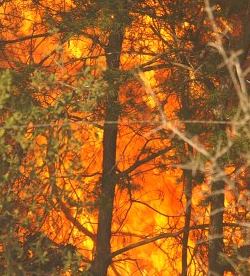
burning trash have caused several hundred fires in over the past few
years during winter holidays in Travis and Hays Counties.
News8
Austin reported, "Fire investigators said the combination of high winds, low humidity and New Year's fireworks creates a potentially dangerous situation.
In a previous year, the Village of Wimberley banned the sales and use
of fireworks within the city limits. This year (2010) no ban has yet
been announced and there was no
comparable regulation of fireworks use and sale within Hays County,
where many fireworks-related fires begin.
|
'Any kind of spark...can set some of this dry grass on fire whether it be a trash fire like we had here or fireworks...' Leroy Opiela of Travis County's sheriff office said."
The tragedy is that most of these fires are preventable.
Every year, cooler weather can bring more home fires from heating and cooking. Outdoor burning may also seem
like an attractive idea. However, with rapidly increasing
population density, the decision to burn outside carries with it heavy
responsibilities affecting property and lives.
Breezy weather due to the
movement of fronts, especially after dry or drying
weather conditions, create hazardous
conditions for fire outbreaks. A fire started in ideal
weather conditions may quickly sweep out of control if the wind picks
up, as it often does with our shifting Texas weather patterns.
Always check burn ban
conditions and the rules for burning in Hays Country
before starting any fires...campfire, brush, or
"controlled" burning of pasture.
Added to the still-common practice of burning brush and trash outside here in Wimberley,
a practice that's dangerous at best, are threats from flames we usually think of as controlled. For instance,
those wonderful wood burning fireplaces that can feel so cozy often send up materials that can land on dry natural materials, like cedar, and spark a combustion that can roar out of control in minutes.
Flues and chimneys should be properly constructed and regularly inspected and
repaired.
Some traditional practices of ranch management continue in this
semi-rural area, most often used by those without an informed understanding of
effects on current neighboring populations and property. Anyone who lives in Wimberley
for a period of time will have experienced the offensively unwelcome intrusion
of neighboring smoke into their homes, often at a level destructive to
furnishings, and not the least of concerns, lungs.
Wimberley is fortunate to have the services of a trained Volunteer Fire
Department with support from CERT, but with unregulated wiring and heating practices, almost everyone here knows someone who has had a house fire or who has experienced one. Common-sense safeguards can prevent many of these, and the holidays are an especially good time to remain vigilant.
|
|
Another common source of danger is the use of fireworks, an activity best left to professionals with adequate emergency backup in place. The fireworks presented by the pros are more impressive, too!
Deaths, injuries and fires occur too frequently when untrained consumers and children light fireworks, and any fireworks during burn ban conditions are extremely dangerous.
Six prominent health and fire safety advocates have called for a ban on consumer fireworks use. These include the American Academy of Ophthalmology, American Academy of Pediatrics, American College of Emergency Physicians, International Fire Marshals Association, National Association of State Fire Marshals, and the
NFPA. |
Fireworks too often result in severe burns, scars and disfigurement that can last a lifetime. According to the
NFPA, even fireworks mistakenly thought to be safe, like sparklers (which can reach temperatures above 1000 degrees F) can burn users and bystanders.
Not only fireworks, which can be quickly regulated,
cause fires during the holidays. Although not in the
same statistical league, candle fires are also more common around
holiday time. Candles can be part of holiday decorations
and candle fires account for upwards of 10 percent of home fires
during the holidays.
The everyday activity of cooking meals is the number one cause of home
fires across the country. These statistics do not
necessarily apply to the Wimberley area, where homes in the Wimberley area
have also ignited from the ubiquitous
"controlled" burning of brush or trash...burns
that can quickly flare out of control. However, almost
everyone knows of examples where a kitchen fire led to
the loss of a home.
Tips suggested by the
National Fire Prevention Association for safety steps during cooking:
- Don't leave cooking food unattended.
- Roll up sleeves and don't wear loose clothing.
- Ban children and pets from a three-foot "safe zone" around the stove.
- Keep pot handles turned in to avoid spills.
- Keep pot holders, dish towels, food packaging and other clutter off the stovetop.
- Clean cooking equipment; built-up grease can catch fire.
- Avoid using a turkey fryer. These units have a high risk of tipping over, overheating, or spilling hot oil, leading to fires, burns, or other injuries.
Using common sense and practicing safety
guidelines will help give you and your loved ones
a way to maintain a safe home. If you see a fire that doesn't fall
within the rules for our area, including illegal
burning of construction materials and/or brush, please
report the infraction to the Hays County Fire
Marshall's office. The home you save may be your own!
For more information about the burn ban, contact
the Hays
County Fire Marshall.
MORE
RELATED LINKS
 National Fire Protection Association
Local Fire Caused by Outdoor Welding
Another Local Fire:
Click for photos from fire on Mail Route Road, just off John Knox
|


 Email this